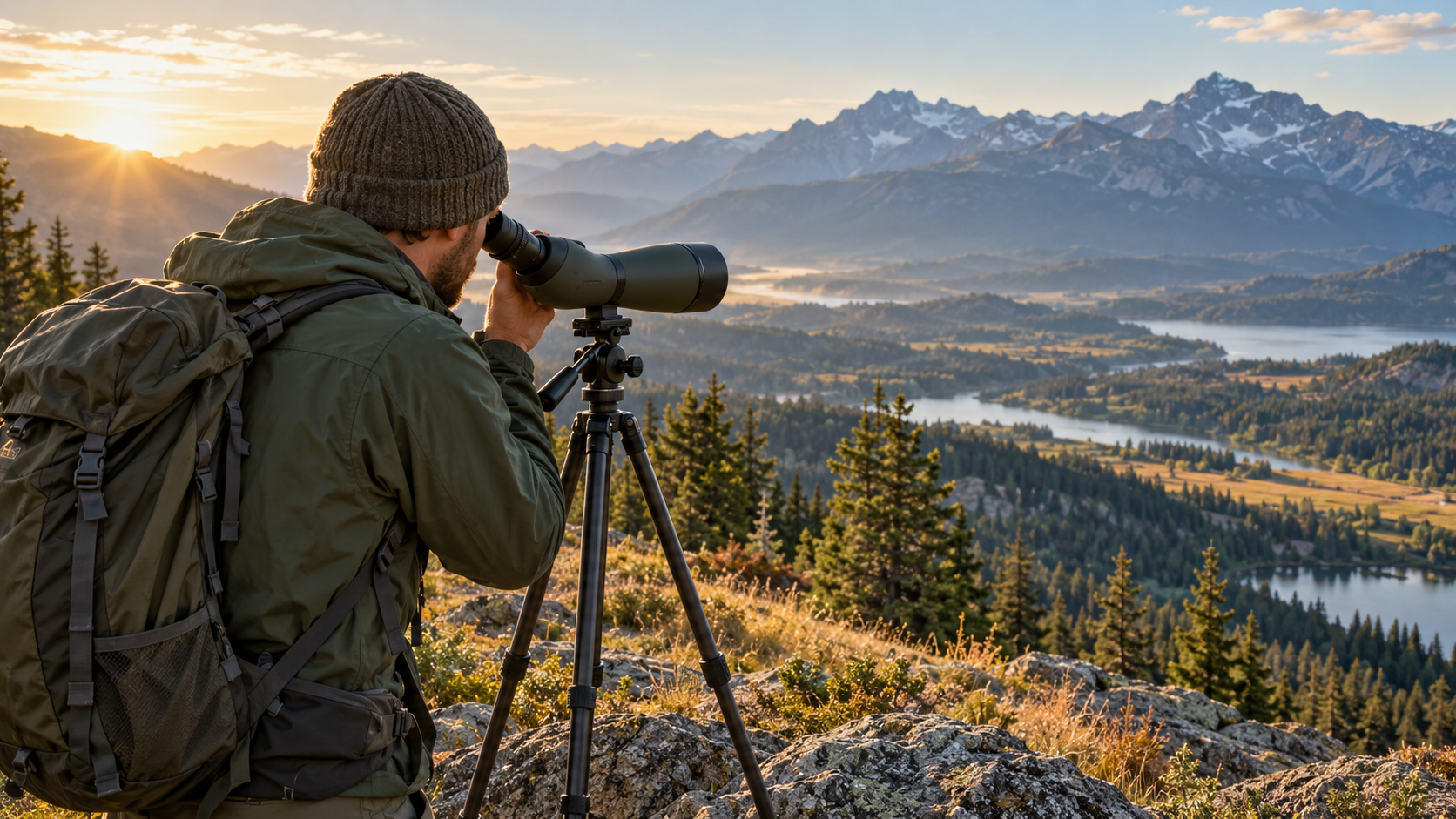
A spotting scope can help you examine distant wildlife, study terrain, or check targets more closely than binoculars allow. Choosing one is a balance between detail, portability, and the amount you want to spend. A large scope can make sense for viewing from a fixed position, while a compact model is easier to carry when you move between locations.
This guide compares four angled spotting scopes across different budgets and uses. Recommendations are based on manufacturer specifications and merchant listings, not our own hands-on testing. Check the exact configuration at checkout: some merchant pages combine several sizes or bundles.
Spotting scopes: quick comparison
| Scope | Magnification / objective | Design | Worth considering for |
|---|---|---|---|
| Vortex Diamondback HD | 16–48x / 65mm | Angled | A lower-cost starting point for general observation |
| Vortex Razor HD | 13–39x / 56mm | Angled | A compact scope for trips with substantial walking |
| Leupold SX-4 Pro Guide HD Gen 2 | 20–60x / 85mm | Angled | Higher magnification from a stable viewing position |
| Swarovski ATC | 17–40x / 56mm | Angled | A premium compact option when budget allows |
Include a suitable tripod and head in your budget. A steady setup helps you make better use of the scope, especially at higher magnifications.
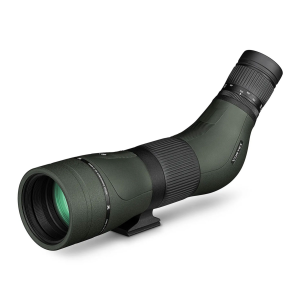
1. Vortex Diamondback HD 16–48×65 angled: a lower-cost starting point
The 65mm Diamondback HD is worth considering if you want a conventional spotting scope without committing to a premium compact model. Its 16–48x zoom provides a range for finding a subject at lower power and examining it more closely once the tripod is settled. The angled eyepiece makes sense for seated observation and sharing a scope among people of different heights.
The reason to choose this version is the balance of scope size and purchase cost. It is a more focused starting point than paying for a larger objective or premium optical line before you know how often you will use a spotter. Compare it against your binoculars and intended viewing distances rather than assuming any scope will reveal every detail at long range.
Best for: a first spotting scope for general wildlife observation or occasional hunting trips.
Tradeoff: the 65mm objective is smaller than the Leupold’s 85mm lens, and high magnification places greater demands on light and stability. Do not assume premium-level image quality from the HD label alone. Select the 16–48×65 angled configuration on the linked page, which also lists other versions and bundles.
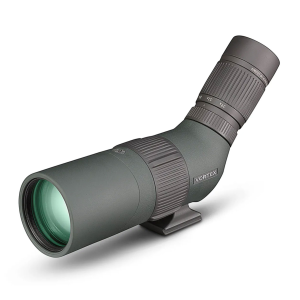
2. Vortex Razor HD 13–39×56 angled: a compact option for walking trips
The Razor HD 13–39×56 combines a 56mm objective with a 13–39x zoom range. Its compact format deserves consideration when a spotter must share pack space with clothing, water, and other equipment. The 13x starting magnification is useful for establishing the view before zooming in.
This model is a reasonable shortlist candidate for a hunter or wildlife watcher who moves between observation points. Its appeal comes from the package as a whole rather than an exceptionally high maximum zoom. If most of your viewing happens near a vehicle, compare the compact format with a larger scope before paying for portability you may not need.
Best for: trips where carrying a compact scope matters more than reaching 60x.
Tradeoff: the 56mm objective and 39x maximum are deliberate size compromises. It is not the choice for someone whose main priority is the largest objective in this list. The selected model is RS-56A, angled; check that configuration rather than treating straight and angled versions as interchangeable.
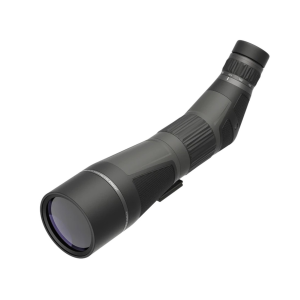
3. Leupold SX-4 Pro Guide HD Gen 2 20–60×85 angled: for longer viewing sessions
The SX-4 Pro Guide HD Gen 2 offers the largest objective and highest maximum magnification among these four picks. Its 85mm lens and 20–60x zoom make it worth considering for observation from a stable position, where carrying a larger scope is less of a concern. The angled eyepiece suits a tripod setup for repeated or extended viewing.
The larger format makes sense when you value a broad zoom range and can accommodate a substantial scope and tripod. Consider how far you will carry the complete setup and whether your usual viewing conditions let you use the higher magnifications.
Best for: stationary wildlife observation and viewing distant terrain with a suitable tripod.
Tradeoff: the larger body adds bulk, and 60x can be limited by wind, heat shimmer, and visibility. The merchant page groups multiple sizes; select 20–60×85 angled, model 185679. The lower starting price shown on that page may apply to a smaller configuration.
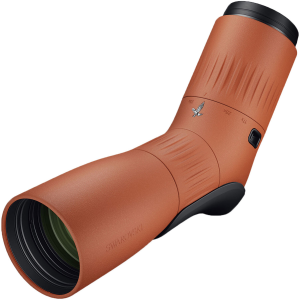
4. Swarovski ATC 17–40×56: a premium compact shortlist option
The ATC combines a 56mm objective with 17–40x magnification in a compact angled scope. It is a complete compact spotter, rather than one of Swarovski’s separate modular objective or eyepiece components. That distinction matters when comparing listings: an attractive price for a module does not necessarily buy a usable complete scope.
Consider the ATC if compactness is important and you are comfortable with a substantial premium. Before spending this much, compare the view and handling in person if possible. Eyepiece comfort, focusing preferences, and the value you place on small differences in the view are personal decisions that a specification table cannot settle.
Best for: frequent users seeking a premium compact scope with an angled eyepiece.
Tradeoff: it costs considerably more than the other picks while retaining a 56mm objective and a 40x maximum. It will not replace a large-objective scope for every task. Confirm the ATC model and selected color on the merchant page; the straight STC is a different configuration.
How to choose the right spotting scope
Match magnification to the conditions
More zoom does not automatically reveal more useful detail. Higher power narrows the view and magnifies vibration, while heat shimmer and haze can obscure distant subjects regardless of the scope. Start at lower magnification to locate the subject, then increase power only while the view remains useful.
Choose objective size with carrying weight in mind
A larger objective can gather more light, but optical design and the magnification setting also affect the view. Compare a complete kit, including the tripod, rather than scope size alone. A compact spotter you are willing to carry may serve you better than a larger setup that stays in the vehicle.
Decide between angled and straight
An angled eyepiece can suit seated observation, looking upward, and sharing a tripod among different users. A straight eyepiece may feel more intuitive when lining up a subject or using certain window-mounted setups. All four selected offers here are angled; choose that design deliberately rather than relying on a generic product-family title.
Check the mount, eyepiece, and accessories
Confirm whether the listing includes the eyepiece, covers, and any advertised accessories. Check compatibility between the scope foot, tripod head, and mounting plate. Phone adapters are usually model-specific, and neither a scope cover nor a window mount replaces a stable tripod for every setting.
Which spotting scope should you choose?
Start with the Diamondback HD if purchase cost is your main constraint and you want a conventional scope for general use. Shortlist the Razor HD when a compact kit matters. Choose the larger Leupold if you mainly observe from stable positions and want the 20–60x range. Consider the Swarovski ATC when premium compact optics fit your budget and you can assess their value for your own eyes.
Check the exact model and variant before ordering, and leave room in your budget for support equipment. The right purchase is the scope and tripod combination that matches your activities, carrying limits, and viewing conditions.