

The best ski boots are the ones that hold your feet securely, match how you ski, and work with your bindings. A highly rated boot can still be a poor choice if its heel pocket, instep, or cuff does not suit you. Start with fit, then compare flex, closure systems, and the features you actually need.
This guide compares five options for resort skiing and touring, with clear reasons to consider each and the tradeoffs to weigh. Our recommendations are based on published specifications and intended use. They are a shortlist for a fitting appointment, rather than a claim that we have skied in these boots. First-time skiers should approach the more demanding models here with a bootfitter’s guidance.
Best Ski Boots: Quick Comparison
| Boot | Best suited to | Flex | Last width | Main tradeoff |
|---|---|---|---|---|
| Salomon S/Pro Supra BOA 100 | Progressing resort skiers seeking a medium fit | 100 | 100 mm | Less support than a stiffer boot for some powerful skiers |
| Nordica Speedmachine 3 BOA 110 | Confident resort skiers wanting medium-volume fit and dial adjustment | 110 | 100 mm | No touring walk mode |
| Tecnica Mach1 MV 130 | Strong, experienced resort skiers who suit a medium-volume shell | 130 | 100 mm | Demanding stiffness and premium pricing |
| Salomon S/Pro Alpha C BOA 95 W | Women seeking a narrower resort fit and cuff adjustment | 95 | 98 mm | Narrow shape will not suit every foot |
| Scarpa Maestrale RS | Experienced tourers who prioritize descent support | 125 | 102 mm | Touring compatibility must be checked separately |
Flex numbers are not standardized across brands, and last width is a reference measurement, not the width of every available size. Neither tells you how a boot will fit your heel, instep, or calf. Prices and available sizes are shown in the offers below; compare the exact version before ordering.
For Progressing Resort Skiers: Salomon S/Pro Supra BOA 100
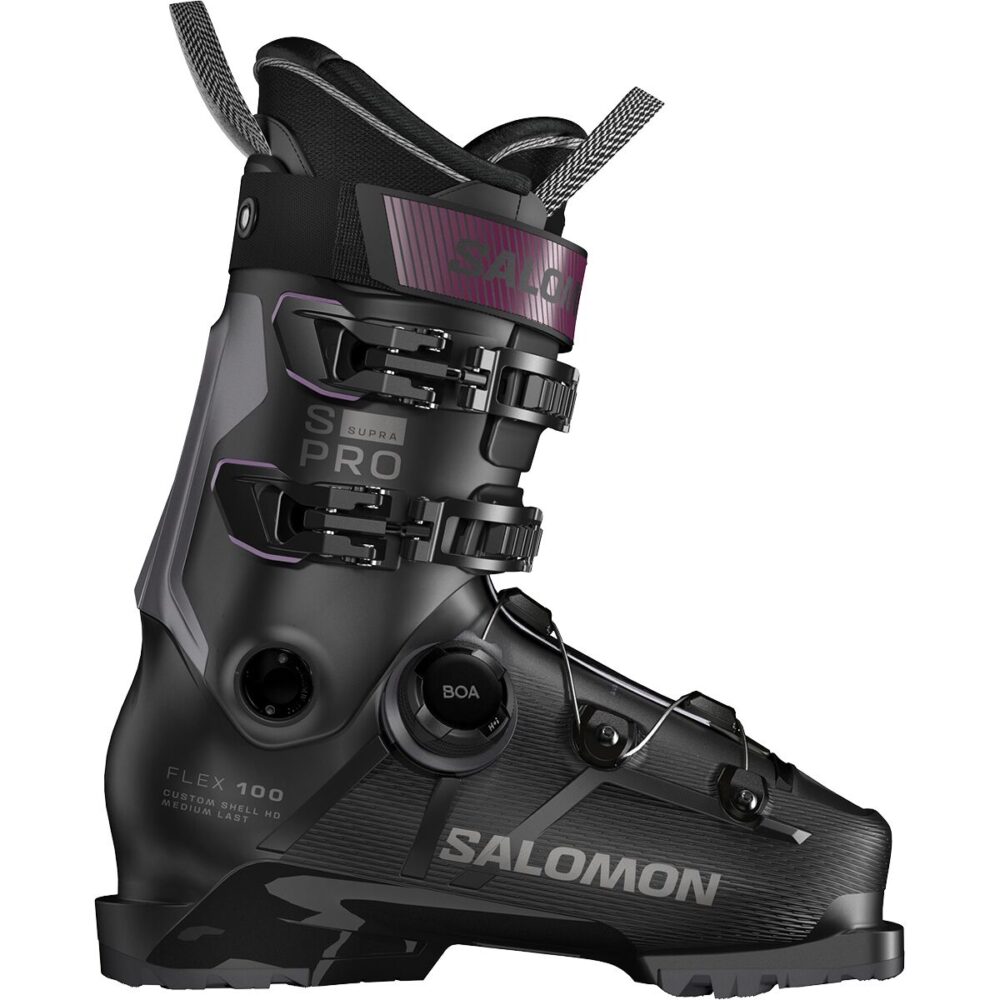
The S/Pro Supra BOA 100 is a sensible starting point for an intermediate skier seeking a medium-width resort boot. The listed version combines a 100 flex and 100 mm last with a BOA lower-shell closure, two buckles, a customizable shell, and a heat-moldable liner. GripWalk soles provide a walking-oriented sole design while still requiring compatible bindings.
Strengths: The dial allows small changes to lower-foot tension, while shell and liner customization give a fitter options for refining the fit. It is worth trying if you want to progress beyond a very soft rental boot without jumping directly to a 120 or 130 flex.
Tradeoffs: A dial cannot compensate for the wrong shell size or heel shape. Powerful, heavier, or aggressive skiers may want more resistance, while a lighter beginner may need a softer alternative. Compare it with the Nordica below during a fitting, rather than assuming ten flex points predict the entire feel.
For Confident All-Mountain Resort Skiers: Nordica Speedmachine 3 BOA 110
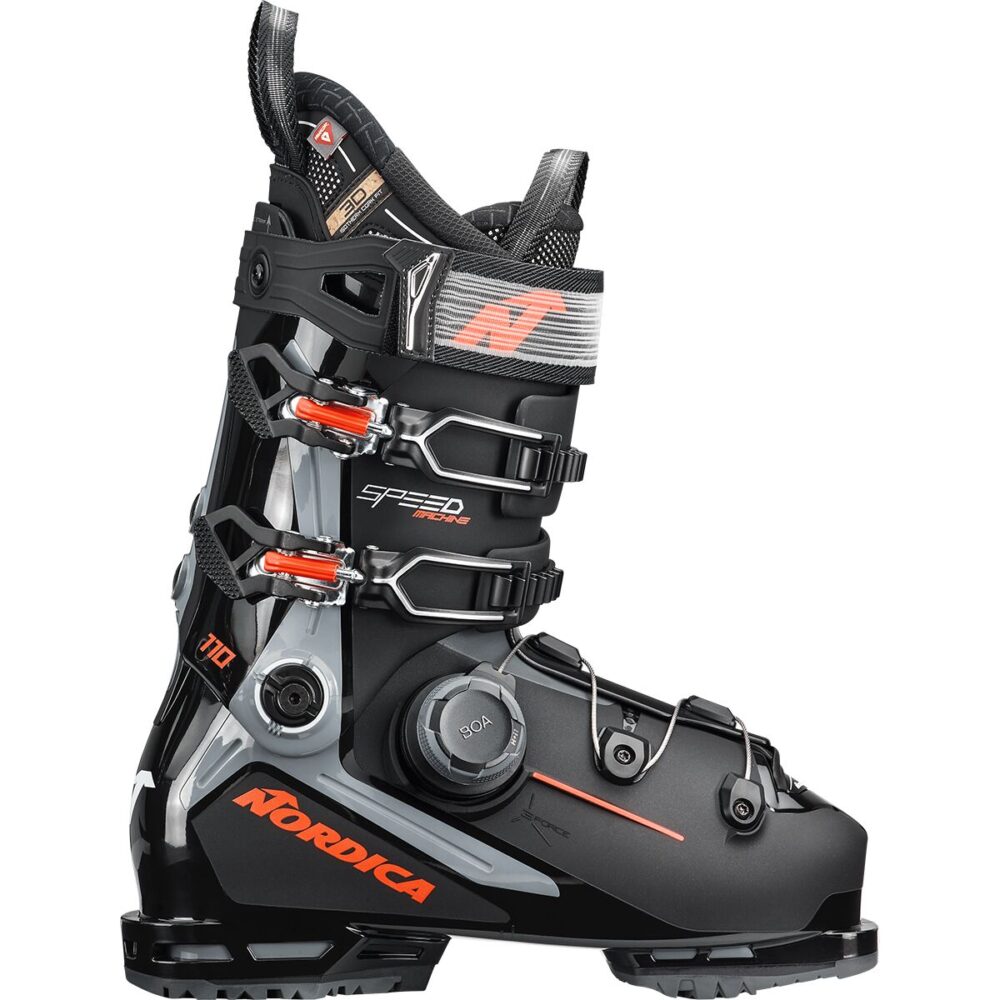
The Speedmachine 3 BOA 110 offers a 100 mm last, BOA lower-shell adjustment, and a heat-moldable 3D Cork Fit Primaloft liner. Its listed flex of 110 makes it an option to try if a more forgiving boot feels insufficiently supportive. This is the BOA version; specifications should not be transferred automatically from the earlier four-buckle Speedmachine.
Strengths: The combination of a medium-volume shape and adjustable lower-shell tension offers a useful fitting alternative to the Supra. Its cork liner and insulation are documented features, although comfort and warmth still depend on fit, circulation, socks, and conditions.
Tradeoffs: It has no touring walk mode. It is suited to lift-served skiing rather than being an uphill touring solution. Do not buy it solely because it is described as all-mountain: the shape and flex must suit your body and technique.
For Strong, Experienced Skiers: Tecnica Mach1 MV 130
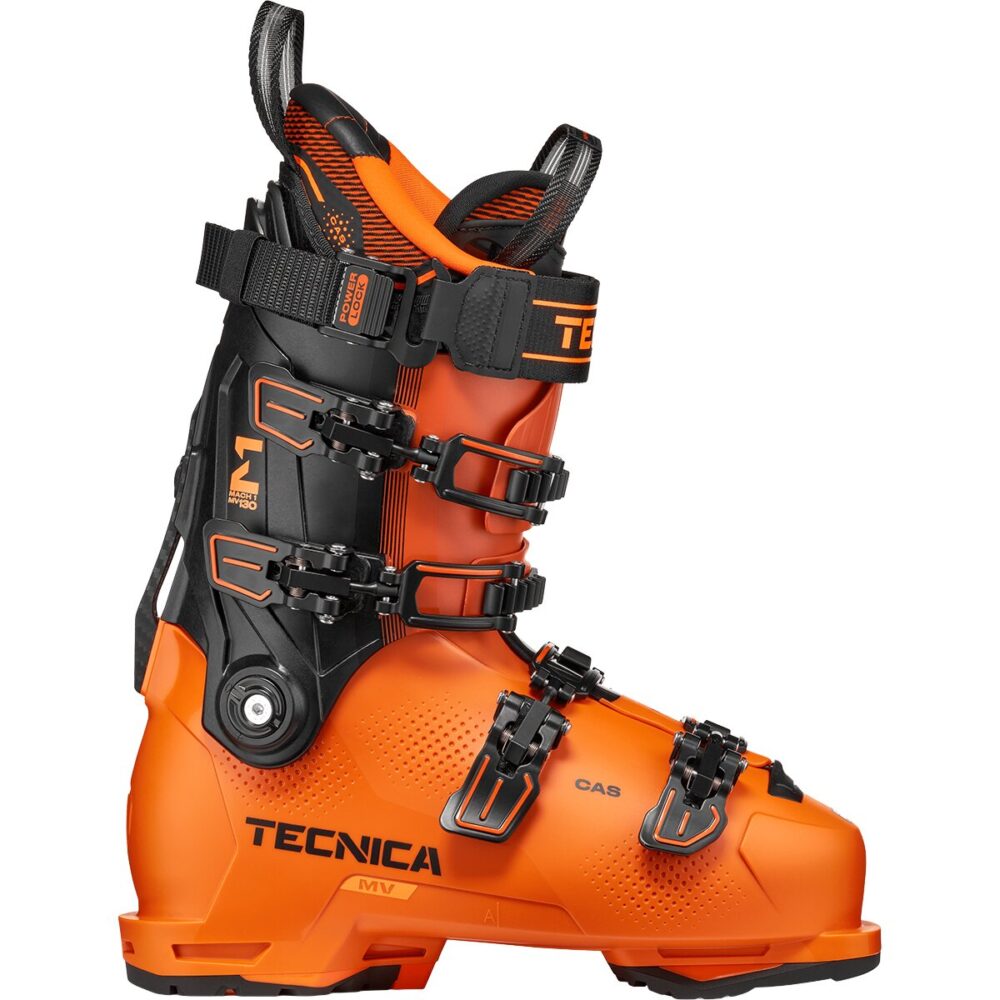
The Mach1 MV 130 is the most demanding resort option in this shortlist. The matched listing specifies a 130 flex, 100 mm last, four micro-adjustable buckles, a C.A.S. shell and liner, and GripWalk soles. Its medium-volume designation is important: other Mach1 widths and closures are different products.
Strengths: It gives experienced skiers a conventional four-buckle option with a stiff platform and fit customization. Consider it if you can flex a 130-class boot appropriately and want support for forceful skiing, rather than simply chasing the highest number.
Tradeoffs: Its stiffness and cost are difficult to justify if they do not meet your needs. A boot that you struggle to flex can make it harder to maintain a balanced stance. Try a less stiff version alongside it and ask the fitter to evaluate your movement.
A Narrow-Fit Women’s Option: Salomon S/Pro Alpha C BOA 95 W
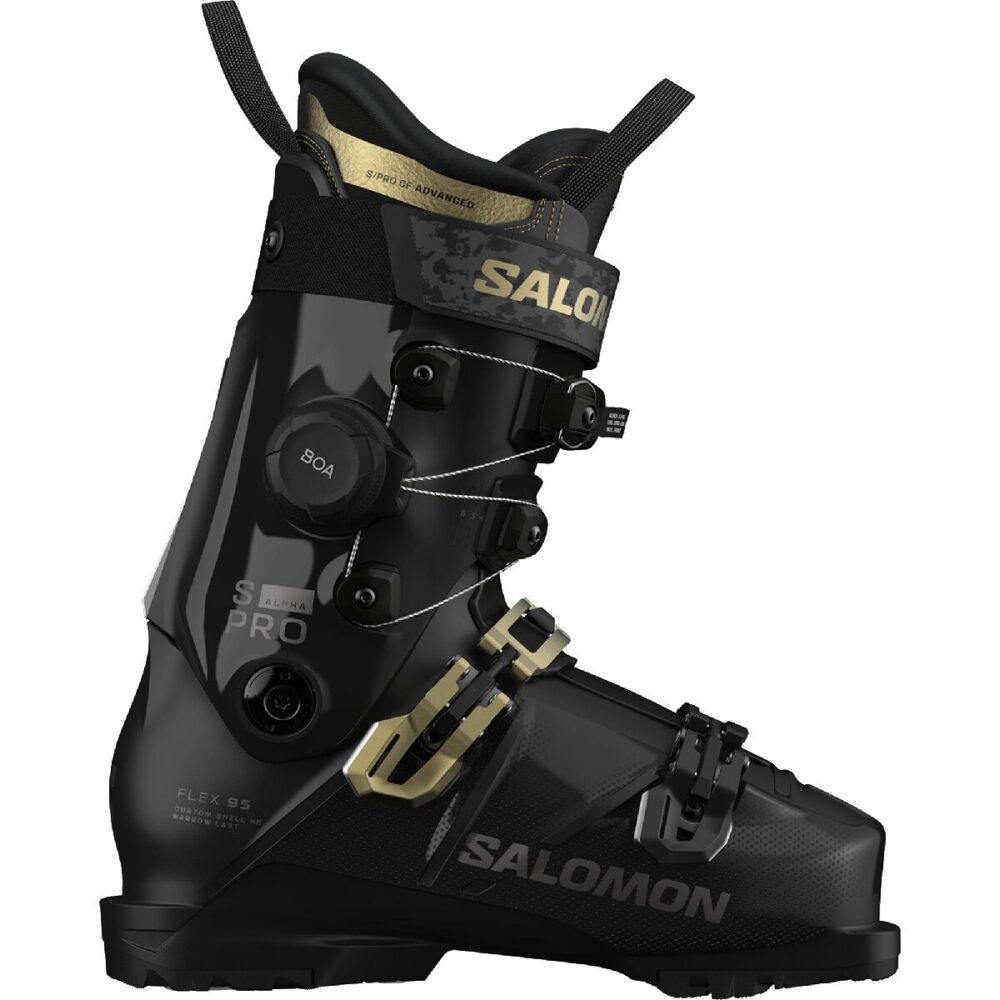
This women’s model combines a nominal 98 mm last and 95 flex with Custom Shell HD construction and a cuff-mounted BOA system. That closure location matters: it adjusts the upper boot rather than serving the same role as the lower-shell dials on the Supra and Speedmachine.
Strengths: It belongs on the fitting shortlist for skiers seeking a narrow shape and adjustable cuff tension. It provides a less stiff starting point than the expert resort option here while retaining a fit-oriented design.
Tradeoffs: Women’s labeling does not guarantee an appropriate fit. A wider forefoot, different instep, or fuller calf may call for another shell. Choose by measured anatomy and how the boot holds you, not by gender labeling alone.
For Descent-Focused Touring: Scarpa Maestrale RS
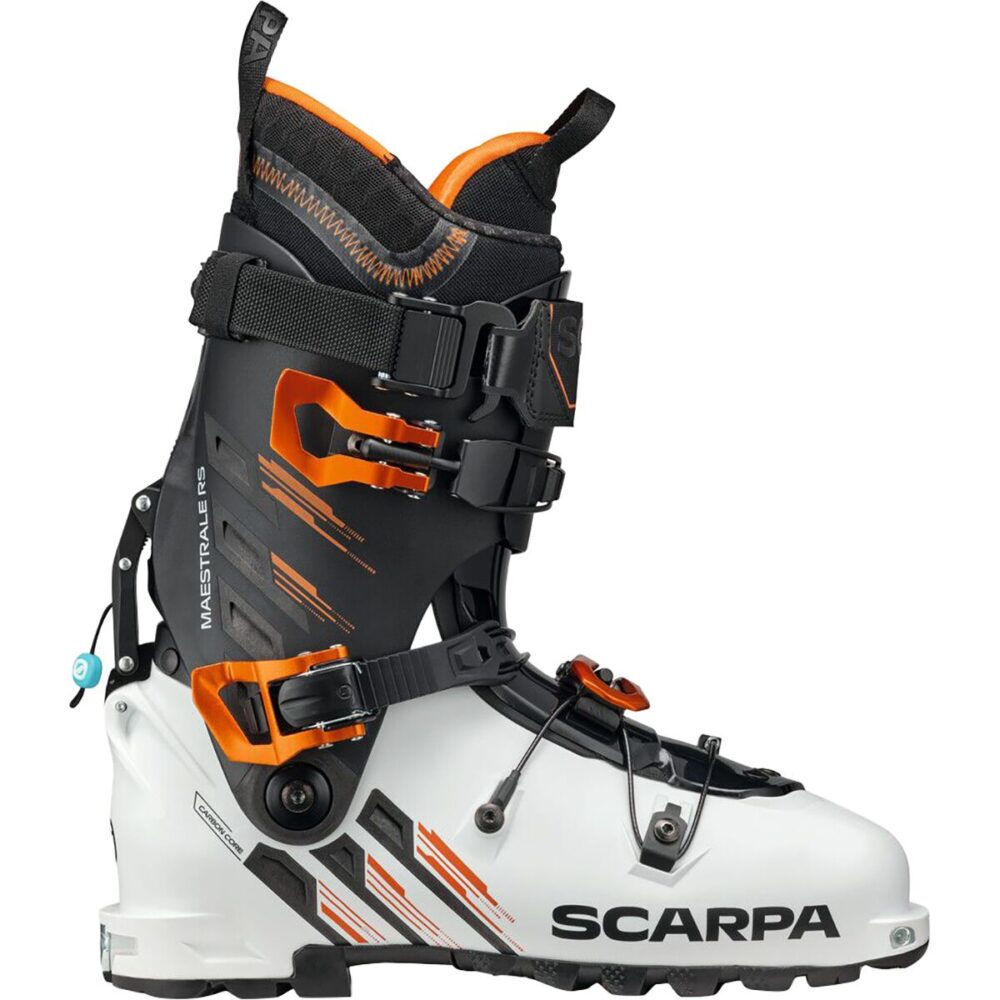
The Maestrale RS is a separate category from the resort boots above. The matched listing specifies a 125 flex, 102 mm last, a touring walk mode, and a heat-moldable liner. It is aimed at tourers who want uphill articulation alongside substantial support for the descent.
Strengths: Its walk mechanism is relevant when you spend time climbing on skins. It is worth considering for experienced tourers who value descending support more than minimizing every gram.
Tradeoffs: Touring boots require careful boot-and-binding matching; this model is not a substitute for a GripWalk resort boot simply because both have treaded soles. Different Maestrale generations also have different details. Confirm the exact version, size, and binding compatibility with a qualified shop before buying.
How to Choose Ski Boots That Fit Your Needs
Start with a shell fitting
Have a bootfitter measure both feet and assess length, width, instep height, heel retention, ankle movement, and calf shape. Mondo sizing is a useful starting point, but converting your everyday shoe size is not a complete fitting method. The liner changes as it settles in; buying extra room to make a new boot feel like a casual shoe can leave you with poor retention later.
Bring the thin ski socks you expect to wear. Describe pressure points and any numbness clearly, and compare several shell shapes before choosing. Heat molding can refine an appropriate boot, but it does not make every shell suitable for every foot.
Choose flex for your body and technique
Flex depends on more than experience level. Body size, strength, ankle mobility, skiing speed, and preference all matter. Published numbers help narrow the field, but the feel varies between brands and changes with temperature. Have a fitter watch you flex the boot rather than using a rigid beginner/intermediate/expert chart.
For a first purchase, prioritize a controllable flex and secure fit. There is no need to buy the stiffest option as insurance against future improvement. The right level of support should let you move effectively now.
Separate resort and touring requirements
Lift-served skiers usually have little reason to pay for touring features they will not use. Tourers need to consider walking articulation, boot weight, fittings, and their chosen bindings alongside descending performance. A hybrid boot may be useful for mixed use, but it introduces another set of compromises and compatibility checks.
Check your bindings before ordering
GripWalk, traditional alpine, and touring soles are not automatically interchangeable. Ask a qualified ski technician to confirm your exact boot model and sole standard against the binding manufacturer’s compatibility information. A new boot may also require binding adjustment and a release check, even if it is nominally the same Mondo size as your old pair.
Budget for the complete fit
Include fitting work, footbeds if recommended, and binding service in the total cost. A discounted previous-season boot can be good value when the shell suits you and the required size is available. A sale is less useful if you have to compromise on fit or cannot return the boot after discovering a problem.
Compare return terms before ordering and clarify whether heat molding or skiing in the boot affects eligibility. Live offers can help you compare prices, but the cheapest listed pair is not necessarily the best purchase for your feet.
Which Ski Boot Should You Try First?
Start with the Supra BOA 100 if you are progressing at the resort and a medium-volume fit is promising. Compare the Speedmachine 3 BOA 110 if you want more support and a different heel-and-instep shape. Strong, experienced skiers can add the Mach1 MV 130 to their fitting shortlist. For a narrower women’s option, try the Alpha C BOA 95 W. Touring-focused skiers should assess the Maestrale RS within a compatible touring setup.
These are conditional recommendations. The best result comes from finding the right shell and flex first, then buying the correct version at a price that fits your budget. If you are new to the sport, our comprehensive skiing guide explains skiing styles and the essentials of choosing gear.