
Choose the pack for the load you actually carry
A good hiking daypack should match your usual trail day: how much you carry, how you move, and whether the same bag needs to work around town. Extra pockets and a higher price do not automatically make a pack a better fit.
This comparison puts three different approaches side by side: the Gregory Nano 20, Osprey Talon 22 and Osprey Stratos 24. The Nano is the lightest option here and the lower-cost starting point; the Talon adds a more trail-focused harness and useful attachments; the Stratos emphasizes suspended-mesh ventilation and structured support.
These are researched recommendations based on documented specifications, not hands-on test results. The selected offers are US listings for specific versions. Prices, sellers and stock can change, so check the current offers below and confirm the details at the merchant before ordering.
- Choose Nano 20 for lighter loads and everyday versatility.
- Choose Talon 22 when active hiking features and fit adjustment matter.
- Choose Stratos 24 when backpanel ventilation and structured support justify extra weight.
How we researched this comparison
We compared manufacturer specifications and merchant listings checked on October 6, 2026. This is a researched comparison; we have not tested these packs on the trail.
The versions we compared
- Gregory Nano 20: model 153058, Optic Black.
- Osprey Talon 22: one-size, 2025-generation 22L model, part 10006764.
- Osprey Stratos 24: 2026-generation 24L model, part 10007528.
Older packs with the same names can have different weights and features.
What we compared
We compared capacity, listed weight, support design and organization to identify which pack suits different hiking needs. Actual comfort depends on your body and the load you carry.
What to check before buying
Prices and availability can change, and different colors or model years may cost different amounts. Confirm the version, seller and final price before ordering.
This comparison covers three selected models. Fit and comfort still need a personal check with your intended load.
Hiking daypacks at a glance
Budget and light loads Gregory Nano 20 | Active day hikes Osprey Talon 22 | Ventilation and support Osprey Stratos 24 | |
|---|---|---|---|
 |
 |
 | |
| Capacity | 20 L | 22 L | 24 L |
| Listed pack weight | 1.20 lb | 2.38 lb | 2.95 lb |
| Backpanel design | Die-cut foam | Close-fitting AirScape | Suspended-mesh AirSpeed |
| Best use here | Light loads; everyday | Active day hikes | Ventilation; structured support |
| Current offer price | $89.95 | $174.95 | $199.95 |
| Check offer | Check offer | Check offer |
Capacity alone is a poor reason to move up the price ladder. The difference between these packs is only four liters, but their support systems and empty weights differ substantially. Think first about the contents of your normal hiking kit. A pack that fits your body with that kit inside is a better starting point than a bag chosen because it has the longest feature list.
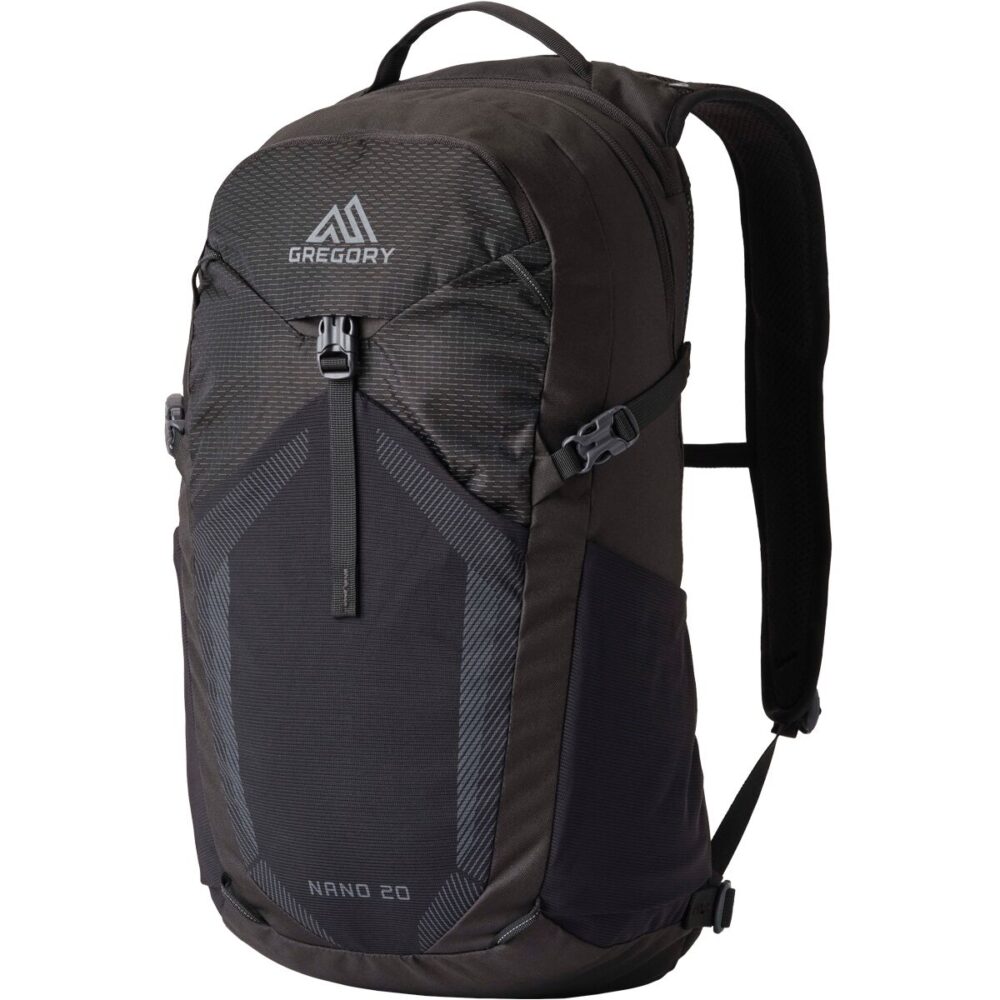
Gregory Nano 20
A 20-liter pack with a listed weight of 1.20 lb, a separate hydration pocket and a removable webbing hipbelt. The Nano is the simplest starting point in this group for mixed trail and everyday use.
The Nano 20 makes the most sense when your goal is to carry a modest kit without buying a more elaborate hiking harness. Its zippered main opening, front storage and bottle pockets give you several ways to separate the things you reach for during a walk. The hydration compartment can also accommodate a tablet, which makes this a practical candidate if one bag needs to cover local trails, commuting and travel.
Its main tradeoff is the waist belt. Gregory lists a removable webbing hipbelt rather than the padded, more substantial belts on the two Osprey packs. Our recommendation is to keep this choice focused on lighter loads: a low empty weight is useful, but it does not tell you how comfortable a pack will feel after hours of carrying your water and layers. Try it loaded before committing to longer outings.
For a beginner, the Nano provides a straightforward place to start without paying for attachments you may not use. For an experienced hiker, its appeal is a simpler setup for a deliberately light day. It is not a reason to leave necessary supplies behind to make everything fit. The lower-cost label applies within this comparison, rather than implying it is the cheapest pack available.
The offer shown is the Gregory Nano 20 in Optic Black, model 153058, in the standard one-size version. The separate Plus Size fit is a different option.
- Lowest listed empty weight in this comparison
- Separate hydration storage and everyday versatility
- Removable belt keeps the setup simple
- Webbing belt is less substantial than the padded options here
- A personal loaded-fit check remains essential
Osprey Talon 22
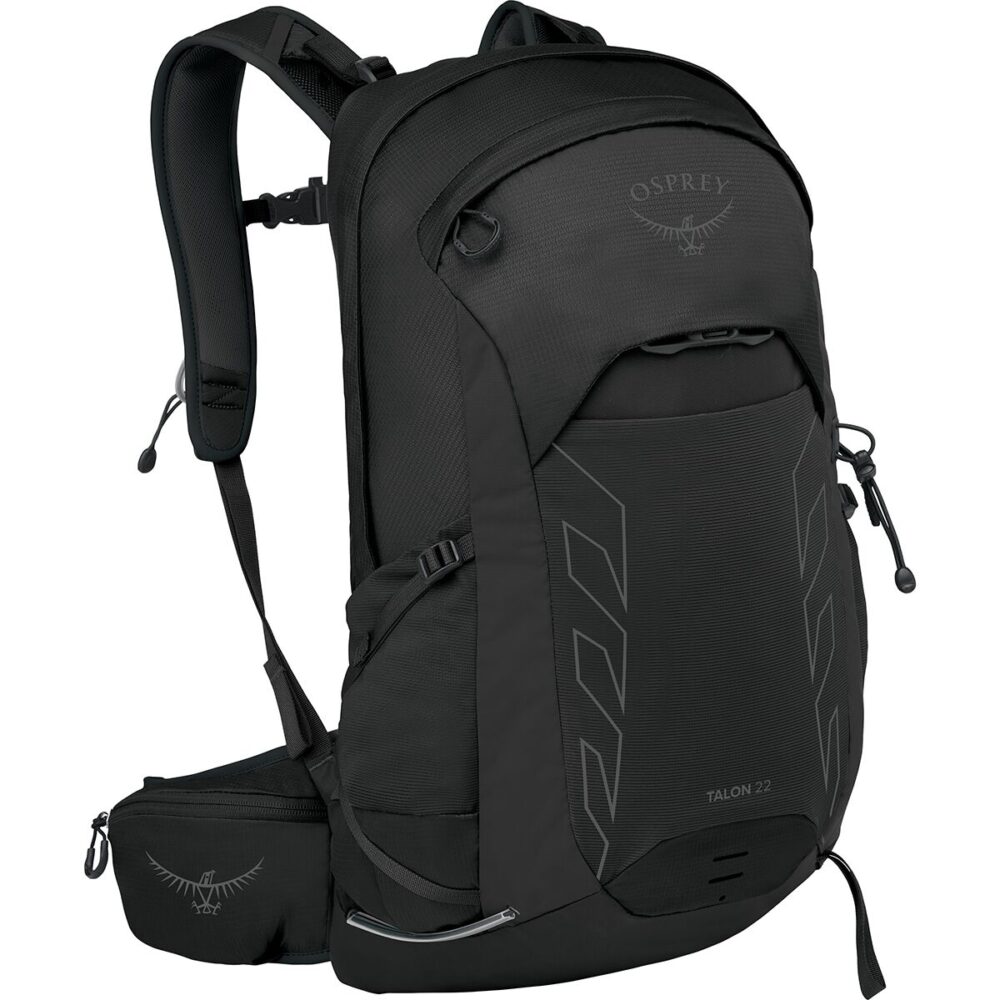
The 2025-generation Talon 22 combines a 22-liter capacity, adjustable fit and close-fitting AirScape backpanel. Trekking-pole and helmet attachments distinguish it from the simpler Nano.
The Talon 22 is the option to consider when you want more hiking-specific organization and a harness designed around movement. The selected version has an adjustable sliding yoke, BioStretch hipbelt, hipbelt pockets and an internal hydration sleeve. Osprey lists it at 2.38 lb. Its close-fitting AirScape design differs from the Stratos suspended-mesh approach, so these should not be treated as interchangeable ventilation systems.
The attachment options are a concrete reason to consider the Talon if your activities overlap. Stow-on-the-Go trekking-pole storage and LidLock helmet attachment give it a clearer hiking-and-cycling role than the Nano. That versatility can justify spending more if you actually use those features. It is less persuasive if your regular outing is a short walk with a bottle and a jacket.
The Talon is heavier than the Nano despite being marketed as a lightweight hiking pack. That does not make either design wrong: the choice is whether the fit adjustment, belt and organization earn their place in your kit. Compared with the selected Stratos, it has a lower listed empty weight and slightly less capacity. We would choose it for an active day-hiking setup where those distinctions matter more than maximizing suspended-mesh back ventilation.
Check the size label carefully. This article covers the current one-size 22L generation, not older S/M or L/XL listings. The merchant identifies a men’s fit; measure your torso and assess the belt and shoulder spacing instead of relying only on that label. A hydration sleeve is not an included reservoir: the selected listing says the reservoir is sold separately.
The offer shown is the 2025-generation Osprey Talon 22 in Black/Coal Grey, part 10006764. Confirm the model version and fit before ordering.
- Adjustable fit and padded BioStretch hipbelt
- Hipbelt pockets plus pole and helmet attachments
- Lower listed weight than the selected Stratos
- Almost twice the Nanoʼs listed empty weight
- Hydration reservoir is not included
- Older Talon versions need separate specification checks
Osprey Stratos 24
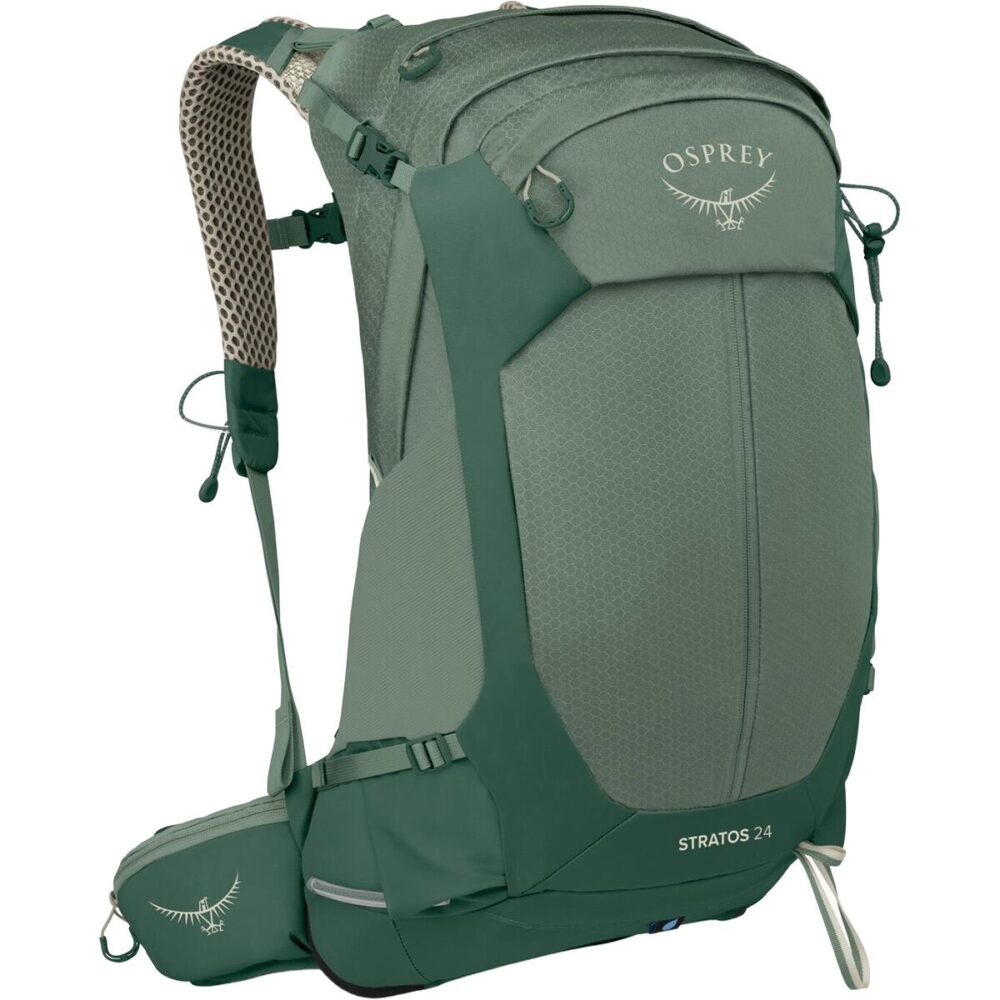
The 2026-generation Stratos 24 uses AirSpeed suspended mesh and a perimeter frame, adds an included raincover, and has the largest capacity here. Its listed 2.95 lb weight is the tradeoff.
The Stratos 24 is the most structured choice in this group. Its suspended mesh and LightWire perimeter frame distinguish it from both the Nano foam panel and the Talon closer-fitting AirScape design. The selected generation includes torso adjustment, a padded hipbelt and load lifters. Those documented features make it the strongest candidate here if you value backpanel airflow and a more substantial carrying system.
The organization is also useful for longer days with a fuller kit. You get hipbelt pockets, side bottle pockets, front storage and a hydration sleeve. The included raincover is a practical addition, but it is not evidence that the whole backpack is waterproof. Keep moisture-sensitive contents protected appropriately, and do not substitute a cover for checking the weather and packing suitable layers.
The cost is not just financial. At 2.95 lb empty, this Stratos weighs more than either alternative before you add anything to it. If your normal load is minimal, you may be carrying extra structure without gaining much practical benefit. We would put it ahead of the Talon specifically when suspended-mesh ventilation and its carrying arrangement are priorities, rather than treating a higher price as proof of greater comfort for everyone.
Version matching matters especially here. Older Stratos 24 pages can list a different weight; this article uses the 2026 generation and the matching merchant model. The men’s-fit designation also deserves attention. Neither an adjustable torso nor a premium suspension guarantees that its harness will suit every body. Compare the loaded feel and return terms before making this your all-day pack.
The offer shown is the 2026-generation Osprey Stratos 24 in Pine Leaf Green, part 10007528. Confirm the model version and fit before ordering.
- Suspended-mesh AirSpeed system and perimeter frame
- Adjustable torso, padded belt and load lifters
- Included raincover and 24-liter capacity
- Highest listed empty weight in this group
- Extra structure may be unnecessary for a minimal kit
- Menʼs-fit harness still requires a personal fit check
How to choose between these daypacks
Bring or recreate the kit you normally carry. Adjust the straps, walk around and reach for your water and snacks. A specification table cannot establish personal comfort.
Start with the supplies your route, season and conditions require. More liters matter only if the pack is still practical to carry and organize.
Nano favors simplicity; Talon adds a more substantial active-use harness; Stratos emphasizes a suspended-mesh frame layout. These are design choices, not measured comfort rankings.
Check the exact model, seller, shipping, returns and any hydration or weather-protection accessories you need. A sale on an older generation is a different offer, not an identical product at a better price.
Which pack fits your hiking day?
For a short local walk that shares a bag with daily errands, start with the Nano. Its simpler layout and lower listed weight are useful reasons to keep the purchase modest. For a longer, more active outing where you want accessible belt pockets and attachment options, compare the Talon against your current pack and decide whether those features solve an annoyance you actually have.
For a fuller all-day kit, especially when suspended-mesh ventilation is a priority, the Stratos deserves a loaded fitting. Its extra capacity and structure give it a distinct role, but they also make it the heaviest choice. Your hiking experience alone does not determine the answer: an experienced hiker with a compact kit might prefer the Nano, while a beginner planning longer outings may appreciate a more substantial harness.
If none fits comfortably, broaden the search rather than accepting a poor fit because a comparison recommends a model. These three products are a starting shortlist. A different harness shape, size range or pack design may be the better answer for your body and routine.
Complete your setup with our guide to choosing hiking boots for different seasons. Pack and footwear decisions both benefit from looking at the routes and conditions you expect to encounter.
Our recommendation: buy for your usual hike
- Budget here means the lower-cost choice among these three, not the cheapest pack on the market.
- Confirm the generation and fit before comparing prices.
- Use the live offer displays, then verify final details with the merchant.
Choose the Gregory Nano 20 for a lighter, simpler trail-and-everyday bag; the Osprey Talon 22 for adjustable fit and active hiking features; or the Osprey Stratos 24 for suspended-mesh ventilation and a more structured carrying layout. Each recommendation follows a different need, rather than a universal winner.
- Measure your torso and review the selected modelʼs sizing guidance.
- Compare your expected kit with capacity and the loaded fit.
- Check the current seller, stock and return terms at checkout.